
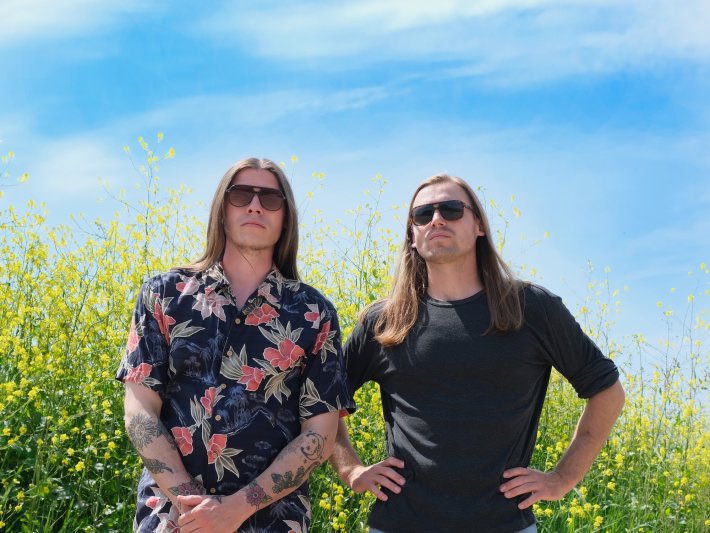
In an age of fast tracks and digital gloss, Dutch brother duo Baby Condor are taking a different route; one paved with analogue warmth, live strings, and stories that linger. Their latest single 'Seventeen' is a deeply textured meditation on memory, change, and what it means to grow up in a world that won’t stop shifting. Recorded entirely in their self-built Mermaid Studio, Nolle and Beinte Groen wrote, arranged, and produced the track themselves, channelling their shared love for timeless songwriting and soul-infused soundscapes.
Blending elements of pop, folk, country, and classic orchestral pop, 'Seventeen' feels rich in harmony, emotionally grounded, and touched with the kind of sincerity that’s becoming increasingly rare. With nods to Paul Simon, Harry Nilsson, and Marvin Gaye, the brothers pull listeners into a world that’s both nostalgic and eerily relevant.
So with the new single out now, we sat down with them to find out more about their origins and what has been inspiring them most over the years.
-
What was the first instrument you fell in love with?
Beinte: I started with Djembe for a year before I switched to drums. Being in a circle, with everyone playing the same rhythm was really cool and I definitely am still inspired by it. The first years playing drums it didn’t really grow on me yet. I stopped lessons, almost even quit drumming all-together, luckily I didn’t. When I was about 22 or so I rediscovered drums. I started lessons again, learned that I was not that good at all, and really started to see the instrument in a different way. I was set free from thinking in “beats” and started focusing on facilitating whatever the song needs. I am a completely different drummer now as I was back then, in many ways.
Nolle: I started on the alto saxophone, then singing, guitar and in the past few years I’ve finally discovered the piano. I love them all, but singing is the most expressive for me. I’ve always been focused more on melody rather than harmony, so monotonic instruments come more naturally somehow.
What kind of music did you love when you were younger?
Beinte: Hard Rock music mostly. That was the scene I was in and I liked it. The energy, the aggressiveness, the drums. Then slowly I discover more subtleties in playing and making music. Going back in time basically, via 70s, 60s, 50s rock, then blues, then, jazz, early funk. Especially when I started drum lessons again I focussed 100% on jazz. I played in a trio and a rock-a-billy garage rock kind of thing, playing Art Blakey shuffles 2 hours on end basically.
Nolle: Our dad owned a lot of 70s music, mostly blues oriented. A lot of classical music too. Like Beinte describes above, we went from that to the 21st century listening to mostly (hard) rock and pop before going back in time and landing around the 60s and 70s again. I guess we’ve always loved that.
What was the first album you remember owning?
Beinte: Lenny Kravtiz - Baptism. I think what drew me to it was the drums and fairly natural production style. I have listened to a lot of music since, and made many turns. It’s fun to listen to it again now, thinking of how substantial this act was back then, my first self-bought CD… Not a bad choice at all for a 14-year old.
Nolle: It might have been Jutin Timberlake - Justified. Still a good record, the guy was huge back then. Production wise maybe a little too slick for my taste nowadays, but great songs.
What is the one song you wished you could have written yourself?
Beinte: From a purely drum perspective, and this is more about playing then writing, The theme (take 2) - Miles Davis. I love the guts and confidence Philly Joe Jones has on his drum solo. It’s not about tricks, skills, epicness, or whatever ego-fulfilling virtue there is. He repeats a single stroke on different volumes with a great swing to it. Nobody can ever do that again, even-tough the simplicity of it.
Nolle: There’s so many haha! God Only Knows comes to mind. The counterpoint, orchestration and beautiful voicings all work together to create a dreamy little world, such a piece of art.
Do you have any habits or rituals you go through when trying to write new music?
Beinte: Nothing. Keep it fresh and unforced all the time. Don’t rely on tricks for confidence.
Nolle: Usually a melody develops throughout a period of days, weeks or even months and then at some point comes out I guess. So less a ritual and more a necessity. I did start to notice, after reading about it in one of Quincy Jones’ books, that the creativity tends to start flowing in quiet or even weary and secluded moments, like late at night when you’re home alone on the couch.
Who are your favourite artists you have found yourself listening to at the moment?
Beinte: Lately I am very much into country haha. Eddie Rabbit, Don Williams, Charley Pride, Kenny Rogers. Pretty random maybe. But I like the songwriting and lyrics. Especially the older stuff, these old cats sing about values, love, society, real topics.
Nolle: I went all in on Jonathan Wilson music for a good year, great artist. His songs hit close to home and sound small and honest, while being so cinematic and well produced at the same time. It would be a dream come true to work with him someday. I’m also really into the other Wilson (Brian) as you’ve probably guessed from the earlier question. And other great songwriters of that American Songbook inspired a generation of songwriters, like Paul Simon, Harry Nilsson, Paul McCartney, etc. A lot of good stuff happened in pop music at that time.
If you could open a show for anyone in the world, who would it be?
Beinte: Michael Kiwanuka would be great.
Nolle: Right now, probably Jonathan Wilson!
What do you find is the most rewarding part about being a musician?
Beinte: People enjoying and appreciating what you do. This doesn’t have to be big crowds, or important people. But just a few that I look up to. You put in a lot of work as a musician, a lot of work and a lot of your identity. It’s not a job, it’s really something you are. And when you get recognized for it, that's very rewarding.
Nolle: It sounds cliché probably, but music is a universal language and its greatest achievements are remembered for a long long time. It’s the premise of maybe creating something so beautiful it echoes through history long after you’re gone.
And what is the most frustrating part?
Beinte: The circle of doubt. Doubt can sneak in so easily during writing, recording, or any phase really. Is it good enough? Does this feel right? Isn’t the sound too this-or-that? These doubts draw away motivation and enthusiasm, making you doubt everything more. This circle comes back many, many times. And when you don’t tackle it it can stop a whole song, or even an album from ever coming to existence. The trick I apply is just acting blindly-naive sometimes. Just go for it and trust on the choice you made in the past. Don’t be too naive or you’ll become indifferent and chances of creating something of quality becomes less. It’s knowing when to be naive, and when to be critical. A very difficult thing.
Nolle: Deciding when something's done.
And what is the best piece of advice you have received as a musician?
Beinte: If you want to sound more like someone, or some style, don’t listen to him or her alone, but listen to his/hers/its inspirations and influences. Go back one line in inspiration and you’ll be able to grow your own version of whatever it is. It also helps you understand how other musicians work or how they are inspired. Plus, you will discover many more artists this way.
Nolle: Make music for yourself before anyone else. I imagine a lot of today’s pop music is being written in office-like buildings, focusing on specific target audiences, with a whole team around it. A song or record is considered a product instead of a piece of art, and it’s logical because we reward marketable products more than meaningful art in today’s society. If you focus on yourself first and what inspires and moves you, you’re more likely to write something that moves others too. The audience will follow later.
-
Baby Condor's new single 'Seventeen' is available to stream now. Check it out in the player below.