
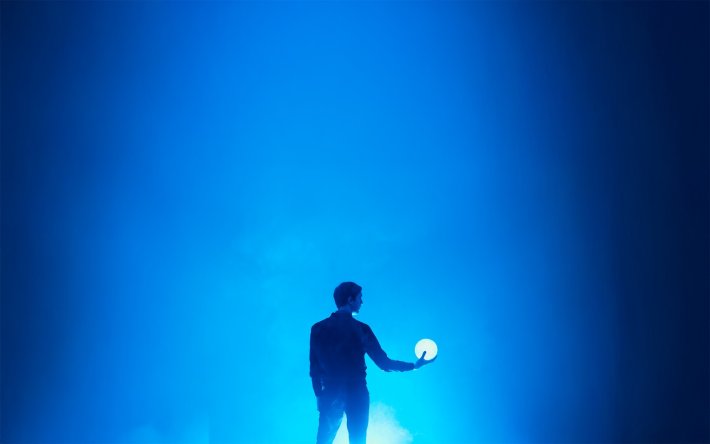
There's a certain kind of creative crisis that doesn't break an artist so much as redirect them somewhere they wouldn't have found otherwise. For Irish songwriter A.S. Fanning, that redirection came literally — a broken wrist early in the writing process, stripping away his ability to absent-mindedly pick up a guitar and let instinct lead. What replaced it were furious early-morning pages of stream-of-consciousness writing, science fiction literature, and a deepening fascination with the idea that reality itself might be more negotiable than we'd like to believe.
The result is ‘Take Me Back To Nowhere’, Fanning's fourth solo album and arguably his most ambitious. Where his previous records drew from Irish literary tradition and folk music, this one reaches further into stranger territory — conceptually shaped by J.G. Ballard's psychological landscapes and Ursula K. Le Guin's reality-bending ‘The Lathe of Heaven’, and musically sitting somewhere between 60s psychedelia, brooding indie-folk, and the kind of baritone-led rock that doesn't rush to reassure you. The album's working title was ‘Greetings from the Depths of Confusion’, which tells you something about the headspace it came from.
But Fanning has never been purely a creature of darkness. Focus track ‘Now I'm In Love’ arrives shimmering and self-deprecating — a genuinely touching account of re-entering the dating world after a long relationship ends, nervous and hopeful in equal measure. It's the kind of song that earns its vulnerability.
Since relocating to Berlin after the dissolution of his band The Last Tycoons, Fanning has built a quiet but formidable reputation across the European indie landscape — three critically acclaimed albums, a Songwriter of the Year nod from Far Out Magazine, Rockpalast, SXSW, festivals across four continents. ‘Take Me Back To Nowhere’ feels like the record where all of that experience funnels into something genuinely singular.
Following the release of the album, we sat down with Fanning to find out more about the chaos that shaped it, the literature that unlocked it, and what it means to embrace disorder as a creative philosophy.
What was the first instrument you fell in love with?
I suppose it was the guitar, but love seems like a strong word. I’m not a great guitarist, I only really ever became good enough to play and write the songs I wanted to. I think I have more sentimental feelings about other instruments that I can’t play, my father was a clarinet player so I always love hearing that.
What kind of music did you love when you were younger?
Rock ‘n’ Roll, mostly. I loved early Beatles stuff when I was about 10 or 11 and from there I got into Chuck Berry, Elvis, Buddy Holly etc. I started a band with my mates when we were about 12 and we used to play all that stuff.
What was the first album you remember owning?
I have a very strong memory of buying ‘(What's the Story) Morning Glory?’ by Oasis on cassette at the local record shop, and listening to it in my Mum’s car, with great excitement.
What is the one song you wished you could have written yourself?
‘The Winner Takes It All’ by ABBA
Do you have any habits or rituals you go through when trying to write new music?
I tend to write first thing in the morning. I find it helpful to do it before my brain starts getting clogged up with mundanities. I also like the feeling of writing when it feels like the rest of the world is asleep. I guess other people write late at night for the same reason, but I’m more of a morning person.
Who are your favourite artists you have found yourself listening to at the moment?
An American band called Twisted Teens have been a bit of an obsession for me for the last year or so. I saw them live in Berlin last year and they were great. Cate Le Bon is another who I saw live in the last few months and she’s incredible.
If you could open a show for anyone in the world, who would it be?
Kraftwerk
What do you find is the most rewarding part about being a musician?
Just playing music. It seems like an obvious answer, but I love the moments when we’re playing something with the band, and I get to pause and look around at a group of people, all brilliant at what they're doing individually, making this sound together . It’s worth taking a step back every once in a while to appreciate it. I love the studio as well, in a different way, it’s more like a constant stimulation that allows me to empty my brain of everything else
And what is the most frustrating part?
Trying to survive. Not having enough room for those moments because of all the other bullshit that goes into trying to survive as a musician.
And what is the best piece of advice you have received as a musician?
Expect nothing
Stream ‘Take Me Back To Nowhere’ in the player below. To celebrate the album’s release, A.S Fanning will embark on a UK Tour (dates below)
2026 UK LIVE DATES
19th March | Brighton | Folklore Rooms
20th March | Bristol | The Louisiana
22nd March | Nottingham | The Grove
24th March | Glasgow | The Hug & Pint
25th March | Manchester | The Talleyrand
26th March | London | The Grace