7/10
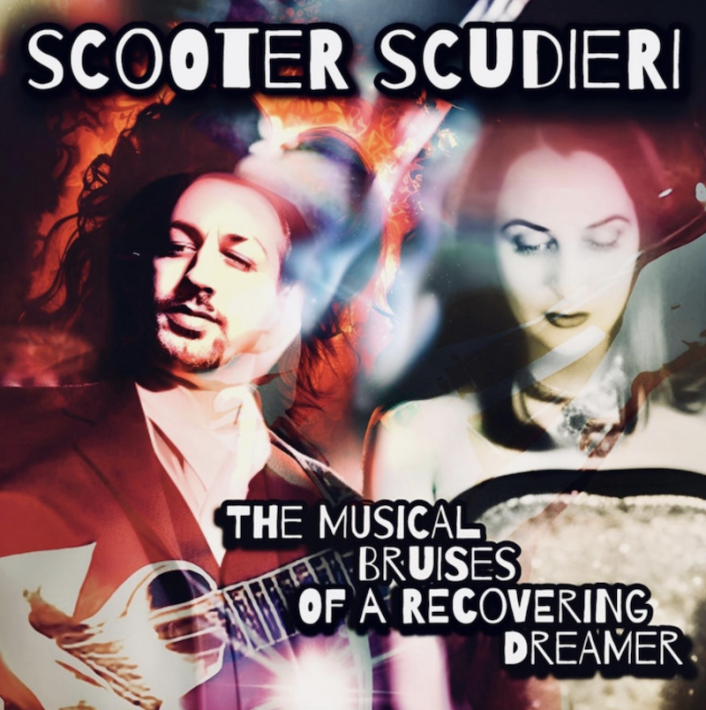
The most revealing moment on Scooter Scudieri’s 'The Musical Bruises of a Recovering Dreamer' arrives immediately: “I never gave up. I just got crushed.” It's a line that separates abandonment from defeat, recognising that an artist can disappear from public view without ever truly walking away from the work.
And that distinction runs through all twelve songs on his wondrous new album. The West Virginia songwriter may now spend his working days painting houses, but his musical history stretches back through national tours, major support slots, industry recognition and advocacy for creators’ rights during the early upheaval of digital music. He was close enough to the machinery of the business to understand its promises, and independent enough to experience its indifference. This record emerges from what remained after those experiences: songs, stubbornness and a continued belief that art might still offer meaning.
Musically, 'The Musical Bruises of a Recovering Dreamer' draws from an era when albums were intended to offer more than a succession of isolated hooks. Guitars, piano, synthesiser textures, prominent bass lines and organic drums build a broad rock framework, while layered harmonies add warmth, theatricality and occasional eccentricity.
Scudieri’s voice is particularly suited to that freedom. He doesn't force every piece into the same polished register, instead adjusting his delivery to the demands of the writing. At different points he sounds intimate, amused, weary, dramatic and openly vulnerable. His stacked backing vocals broaden that range further, moving from soulful support to unusual falsetto passages and dense, choir-like arrangements. The variation gives the record personality, even when its ambitions occasionally exceed the neat boundaries of conventional rock production.
At the album’s centre is ‘She Is the Sun’, written for his wife Kelly, and revisited decades after its original creation. Its presence gives the broader story a vital source of stability. While much of the record concerns ambition, loss and artistic survival, this song turns towards a relationship that has endured alongside those changes, gathering the accumulated weight of loving someone across almost forty years.
Much will understandably be made of the project’s use of artificial intelligence. He describes the campaign as a potentially unprecedented publicly documented AI-managed comeback, having developed a customised system inside ChatGPT to help catalogue his work, preserve his history, plan releases and organise the enormous volume of material surrounding the album.
And the distinction between management and authorship matters. Scooter Scudieri didn't use generative technology to compose lyrics, produce vocals or create the recordings. The songs remain entirely his, supported by a tool intended to handle some of the strategic and administrative burdens that independent artists frequently face alone. Whether the experiment proves to be genuinely historic is less important than the question it raises: can technology serve the artist without gradually becoming the artist? But only time will tell on that one.