7/10
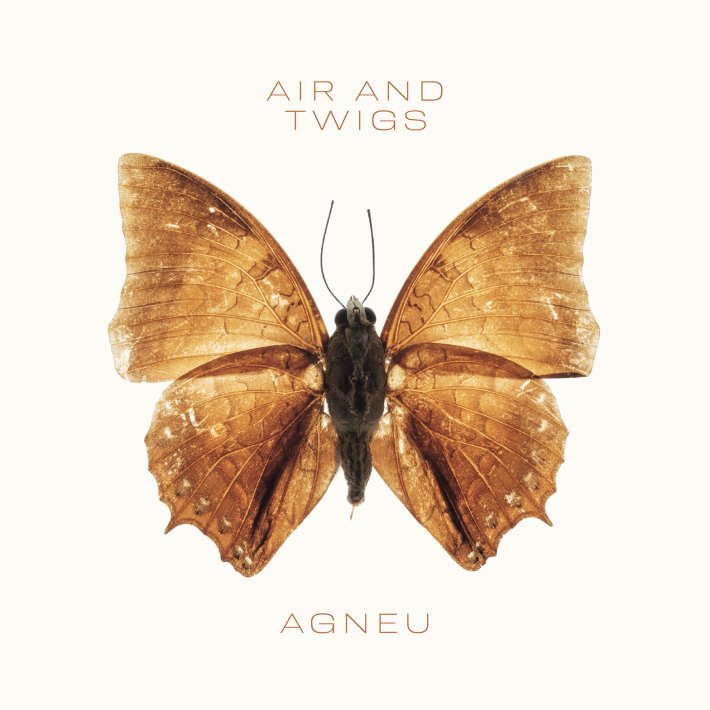
There's something quietly compelling about an artist arriving at songwriting through another discipline entirely. And on his new album 'Air and Twigs', New Zealand's Agneu approaches music with the instincts of a photographer: observing first, circling the subject, adjusting the frame, and waiting until the story reveals itself.
The eight-track album is rooted in lived experience, drawing from photographs, memories, conversations and moments collected over the course of a life spent documenting how people move through the world. But instead of chasing the directness of conventional songwriting, he describes the pieces as cinematic vignettes, and that feels central to the record’s identity.
The name Agneu is a deliberate variation on the artist’s mother’s maiden name, Agnew, chosen both as a personal connection and as a way of avoiding confusion with others who carry it. Music and poetry already run through that family history, from a distant relative writing poetry in Canada in the nineteenth century to a brother who went on to form the New Zealand indie band Pop Mechanix.
Agneu’s own musical path began just as early. Given a guitar around the age of ten, he later had a brief stint playing with Jordan Luck’s pre-Dance Exponents project before leaving Aotearoa for the UK to study photography. Music remained part of the background, but it was not until late last year that the idea of writing fully formed songs became the focus. And that unusually long gap gives 'Air and Twigs' an unusual perspective.
This doesn't feel like an artist trying to reinvent himself so much as one medium gradually spilling into another. The observational patience of photography becomes the foundation for songwriting, and the result is a record concerned with detail, memory and the way small moments can hold larger meanings.
In all, 'Air and Twigs' feels personal without being overly confessional, cinematic without becoming grandiose, and reflective without losing its sense of movement. It's the sound of a storyteller discovering that the same eye used to frame an image can also shape a song.