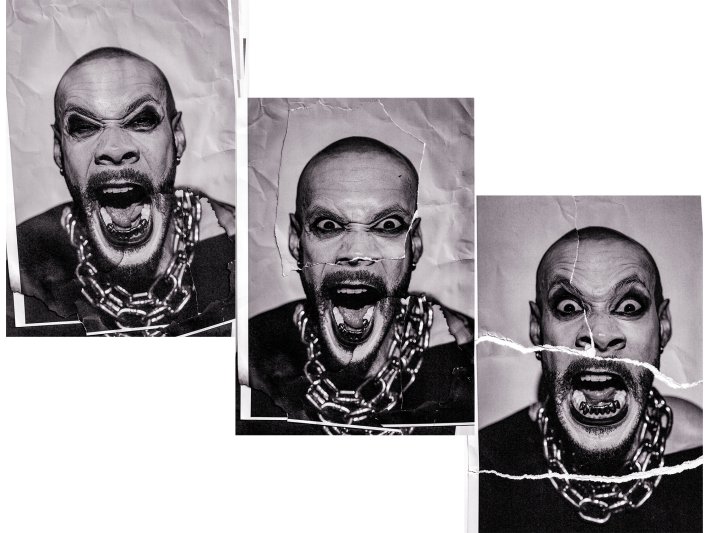
Some artists spend years trying to soften the qualities that make them difficult to categorise. But on his latest offering ‘Troublemaker’, Naarm/Melbourne artist Kwasi takes the opposite approach, magnifying every sharp edge until alienation becomes swagger, distortion becomes identity and being misunderstood begins to feel like a source of power.
Arriving ahead of his debut album 'Outstanding MISFIT', the single captures an artist no longer interested in negotiating for acceptance. Where earlier material may have wrestled with the feeling of standing outside the room, ‘Troublemaker’ appears to kick the door open, embracing the label placed upon him and turning it into something self-defined.
Produced by Paco Laprod, the track is built for impact. Heavy low end, tightly wound percussion and abrasive textures create an atmosphere of constant movement, as though the music is accelerating through a city lit by alarms, headlights and fractured neon. Yet beneath the apparent chaos is considerable control. The rhythm feels calculated, locking his performance into a hypnotic forward motion while leaving enough space for his personality to dominate.
Musically, the track occupies the increasingly fertile territory between alternative hip-hop, industrial production and punk-minded attitude. The bass carries physical weight, while the distorted details around it prevent the song from becoming overly polished. Every element appears designed to retain friction, giving the performance a lived-in intensity rather than the clean aggression of a studio exercise.
As an introduction to his new album, ‘Troublemaker’ succeeds because it does more than announce a louder phase. It establishes the emotional logic behind the rebellion. Kwasi has reached the point where being misread is no longer something to correct, but something he can manipulate, dramatise and ultimately own.
Dark, propulsive and charged with defiant charisma, ‘Troublemaker’ finds Kwasi turning the outsider position into the centre of his world. He may still be looking in from the margins, but with this much force behind him, the walls are unlikely to remain standing for long.